
By Paul Riddle, D.Min., BCC
Visiting a person in the hospital can be an intimidating experience, especially if you don’t do it very often. When I ask people who attend Lifeline’s workshops what they want to get out of the training, many of them say something like, “I want to learn what to say when I visit someone in the hospital.” Beneath the surface of this seemingly straightforward goal are several concerns that often go unspoken:
- “I care about the person I’m visiting, and I want to do the right thing.”
- “I’m a little nervous about this, and I don’t want to mess up.”
- “If I say the right words, I can make the situation better.”
In this article, I will address these unspoken concerns briefly, then discuss some things to bear in mind when making a hospital visit that will help the encounter be a blessing to the person you visit, and to you as well.
Unspoken Concerns
“I care about the person I’m visiting, and I want to do the right thing.”
Your heart is in the right place! You’re approaching this visit with a sense of responsibility grounded in compassion – a desire to be of support to a person going through a difficult time.
“I’m a little nervous about this, and I don’t want to mess up.”
It’s normal to feel a little nervous when undertaking a task that’s important to you and that you want to do well. Athletes often experience nerves before a big game. With training and practice, they learn to channel that nervous energy into heightened awareness and focused effort. You can do the same when making a hospital visit.
“If I say the right words, I can make the situation better.”
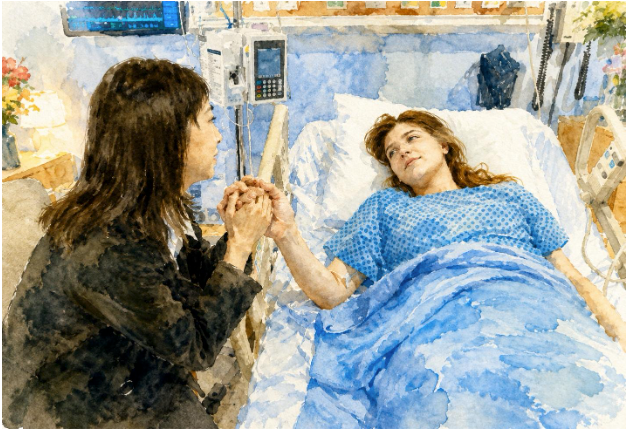
There are no magic words that will make the pain of a loved one’s death or the shock of bad medical news go away. What matters most is your presence. People most likely will remember that you showed up. They probably won’t remember what you said, unless it was hurtful or insensitive.
Some Things to Bear in Mind
- Respect the work the patient is doing.
When a person is admitted to the hospital, that person’s life is disrupted on several levels, including effects of the illness itself; disruption of familiar routines; reduced contact with loved ones, especially if the patient is from outside the local area; disruption of employment; financial concerns; uncertainty about the future. A person dealing with a serious illness or loss is doing significant emotional and spiritual work. You as a visitor can’t do that work for the person, but you can support them in doing that work by showing up, being emotionally and spiritually present, listening without judgment, and avoiding the temptation to fix or advise.
- Respect the mission and concerns of the hospital.
A hospital is a complex institution whose mission is to cure disease, promote health, and protect the safety of patients, staff, and visitors. It has established procedures for regulating access to patients and patient care areas, for infection control, and for security. As a visitor, you are responsible for following these procedures. These procedures may include obtaining a visitor pass or badge and wearing personal protective equipment (PPE) to enter certain rooms and spaces. Visitor access may be restricted in some areas or on some units. Follow instructions of hospital personnel and pay attention to signs posted in the hospital, in patient care areas, and on patient rooms. When in doubt, ask.
- You are responsible to the patient, not for them.
Well-meaning visitors sometimes forget this. Feeling responsible for the patient, they may try to fix the situation, protect or rescue the patient, give advice, carry the person’s feelings, and speak much more than they listen. A visitor operating in “responsible for” mode may unwittingly overlook the patient’s competence and power to manage their situation. A healthier approach is to come alongside the patient with a sense of responsibility to them. A visitor operating in “responsible to” mode shows empathy, listens actively, and affirms the patient’s competence.
- Be intentional before, during, and after the visit.
Before the visit, center yourself spiritually; check for any instructions (e.g. mask and/or gloves) that may be posted on the door; wash your hands (or use alcohol-based gel) before entering the room and after leaving the room. During the visit, greet the patient and ask if this is a good time for a visit; acknowledge others who may be in the room, including staff; engage the patient in an invitational and supportive way. Listen actively and be responsive to the patient and others in the room. If you offer prayer or other spiritual resources, give the patient a graceful way of declining. Most hospital visits are brief (10 minutes or less) but be prepared to stay longer if the patient indicates a desire for a longer visit. When the visit is ending, express your appreciation to the patient for the time you have spent together. After the visit, take a breath, reflect briefly on the visit, and entrust the patient to God and to the others involved in their care. Respect the patient’s privacy and the confidentiality of your encounter.
For Further Reading
Gabriel Fisher, A Brief Reflection on Pastoral Care, Lifeline Chaplaincy, 2025